Last updated: November 19, 2026
Food is the one dog expense you pay every single month. For most owners it lands between $25 and $125 a month for dry kibble. Fresh, air-dried and freeze-dried diets can cost two to five times more. The right budget depends on your dog’s size, the type of food and any diet your vet recommends.
The short version
| Dog size | Typical monthly food cost |
|---|---|
| Small dog | $25 to $60 |
| Medium dog | $40 to $90 |
| Large dog | $70 to $150+ |
| Treats (any size) | $5 to $20 extra |
Ranges for standard to mid-range diets. Premium, fresh or prescription food costs more.
Cost by type of food
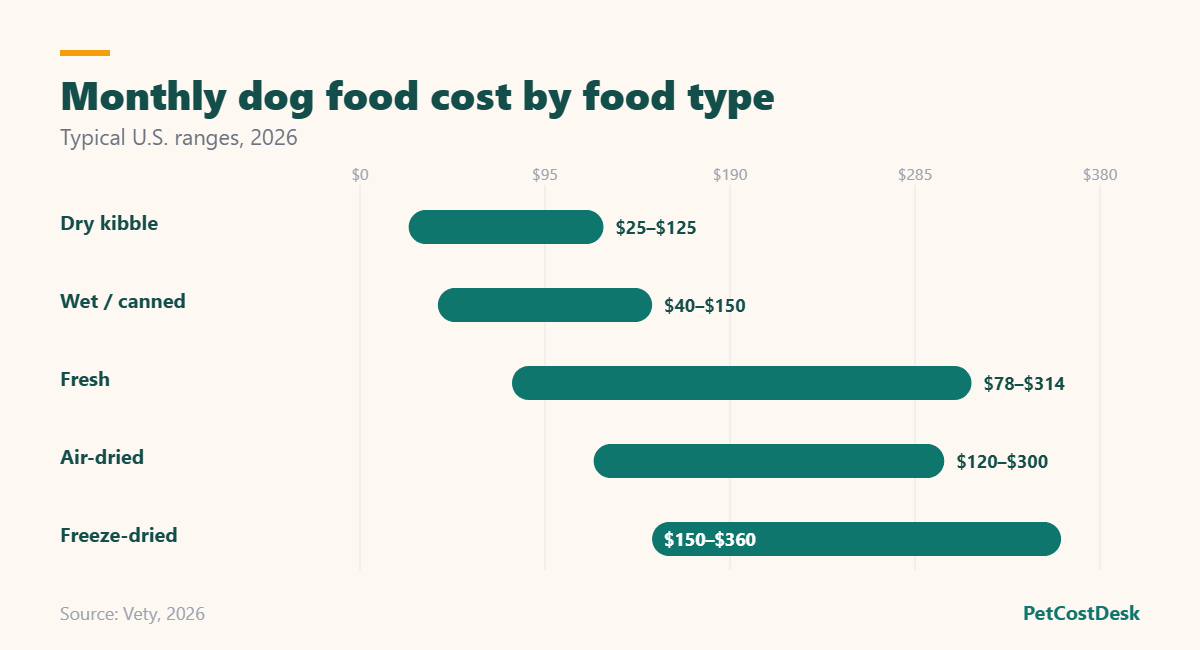
Food type drives the price more than brand does. Dry kibble is the cheapest per day because it is calorie-dense: you feed less volume for the same energy. Typical monthly ranges:
- Dry kibble: about $25 to $125 for small and medium dogs, up to about $170 for large dogs.
- Wet or canned: about $40 to $150.
- Fresh (subscription meals): about $78 to $314.
- Air-dried: about $120 to $300.
- Freeze-dried: about $150 to $360.
Many owners mix: kibble as the base with a fresh or wet topper. A half-fresh plan can cut a fresh-food bill roughly in half.
How to calculate your real cost
The bag price is misleading. Two bags at the same price can last very different amounts of time. Use cost per day instead:
- Find the bag price and the bag weight.
- Check the feeding guide on the bag (or your vet’s advice) for your dog’s daily portion.
- Work out how many days the bag lasts, then divide the price by the days.
Example: a food that works out to $2.50 a day costs about $76 a month and over $900 a year, before treats and shipping. Comparing cost per calorie, not per pound, is the fairest way to compare foods.
What changes the bill
- Size and activity: a 75-pound active dog can eat three or four times what a 15-pound dog eats.
- Life stage: puppies eat more often and need puppy formulas; seniors may need different diets. See senior dog care costs.
- Prescription diets: for kidney, urinary, gut or allergy problems. These cost more and should only be changed with your vet.
- Shipping and subscriptions: auto-ship discounts can help, but delivery fees can cancel them out.
Is more expensive food better?
Not automatically. A higher price often reflects marketing, packaging or fresh delivery rather than better nutrition. A sensible check is whether the food is labeled “complete and balanced” for your dog’s life stage. Ask your vet which foods fit your dog. Don’t switch diets suddenly or for medical reasons on your own.
Ways to spend less without cutting corners
- Buy the largest bag you can store and use before it goes stale.
- Use auto-ship discounts from big retailers.
- Measure portions with a real measuring cup. Overfeeding wastes money and adds weight.
- Count treats as part of the daily calories.
- Use fresh food as a topper instead of a full diet.
Food is one line in a dog’s yearly budget. See the full picture in how much a dog costs per year and more tips in how to save money on pet care.
Key takeaways
- Most dogs eat $25 to $125 a month of kibble; large dogs and premium diets cost more.
- Fresh, air-dried and freeze-dried foods often run $78 to $360 a month.
- Compare foods by cost per day or per calorie, not by bag price.
- Prescription diets should only be changed with your vet.
- Measuring portions and mixing kibble with a fresh topper are easy savings.