Last updated: November 19, 2026
Pet care keeps getting more expensive. Rover estimates an adult dog costs about $1,930 to $5,305 a year, and most pet parents say their costs went up last year. The good news: most of the bill comes from a few big categories, and each one has safe ways to spend less. None of these tips involve skipping care your vet says your pet needs.
The short version
| Category | Best way to save |
|---|---|
| Vet care | Prevention, vaccine clinics, ask for estimates |
| Big bills | Insurance early or a dedicated savings fund |
| Food | Compare cost per day, measure portions |
| Grooming | Brush at home, stretch time between full grooms |
| Travel and boarding | Book early, swap sitting with friends |
| Housing | Negotiate pet rent, compare total rent |
Vet care
- Don’t skip prevention. Vaccines, parasite prevention and yearly exams cost far less than treating parvo, heartworm or advanced dental disease. See dog vaccines and cat vaccines.
- Use low-cost vaccine and spay/neuter clinics run by shelters and humane societies. Read spay and neuter costs.
- Ask for a written estimate before any procedure, and ask which items are essential now and which can wait. Prices for the same surgery vary a lot between clinics; see pet surgery costs.
- Ask about prescriptions. Your vet can often write a prescription you fill at an online pet pharmacy or a big-box pharmacy, which may be cheaper.
- Brush your pet’s teeth. Daily brushing can delay costly cleanings and extractions. See dental cleaning costs.
- Keep your pet at a healthy weight. Extra weight is linked to joint problems and other chronic issues that get expensive.
Big and unexpected bills
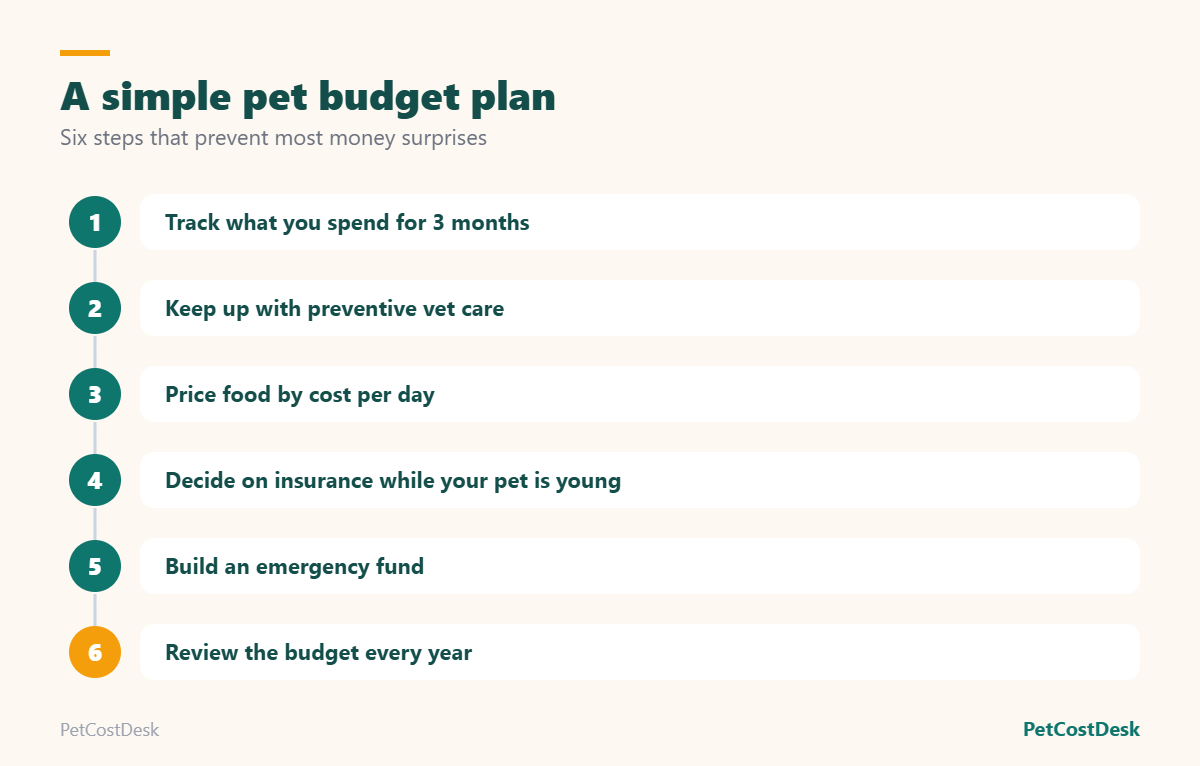
- Decide on insurance early. Premiums are lower and nothing is pre-existing yet. Start with is pet insurance worth it and how much it costs.
- Tune your policy. A higher deductible lowers the premium; see deductibles and reimbursement. An accident-only plan is a cheaper middle ground.
- Or save on purpose. Put a fixed amount into a separate account every month. Compare the two approaches in insurance vs. saving.
- Know your options before an emergency. Read emergency vet costs and how to pay a vet bill you can’t afford now, not at 2 a.m.
Food and supplies
- Compare by cost per day, not bag price. Our dog food guide shows how.
- Measure every meal and count treats. Overfeeding wastes money.
- Use auto-ship discounts and buy larger bags you can store properly.
- Buy basic gear first. Puppies and kittens outgrow and destroy things. See the first-year puppy checklist.
Grooming, boarding and travel
- Brush at home to avoid dematting fees, and learn to trim nails. See dog grooming costs.
- Book boarding early for holidays and ask about multi-night discounts. Compare options in boarding vs. pet sitter.
- Swap pet sitting with a friend or neighbor you trust.
- Check whether flying your pet is worth it. Fees are $99 to $150 each way; see airline pet fees.
Housing
- Negotiate pet rent and compare the total monthly cost of each rental. See pet deposits and pet rent.
Getting a pet
- Consider adoption. Adoption fees often include vaccines, a microchip and spay or neuter. Compare in adopting vs. buying a dog, and check the full yearly budget for dogs and cats.
Where not to cut
Some savings cost more later. Don’t skip core vaccines, stop prescribed medication, switch a prescription diet, or delay a vet visit for worrying symptoms to save money. If cost is the problem, tell your vet. Many clinics can offer a staged treatment plan, a payment plan or a lower-cost option.
Key takeaways
- Prevention is the cheapest care: vaccines, parasite control, dental care and a healthy weight.
- Decide on pet insurance or a savings plan before a big bill arrives.
- Compare food by cost per day and measure portions.
- Book boarding early, brush at home and negotiate pet rent.
- Never cut prescribed care to save money; ask your vet about lower-cost options instead.