Last updated: November 19, 2026
Flying with a small dog or cat in the cabin usually costs $99 to $150 each way on U.S. airlines, so a round trip is often $200 to $300 in fees alone. Bigger pets are harder. Several major airlines no longer fly pets as checked baggage or cargo for the general public, which can push the cost into the hundreds or thousands of dollars.
The short version
| Cost | Typical amount |
|---|---|
| In-cabin pet fee | $99 to $150 each way |
| Round trip in cabin | About $200 to $300 |
| Large dog by cargo or pet shipper | About $500 to $1,000+ each way |
| USDA endorsement (international) | From about $101 per certificate |
| Airline-approved carrier | One-time purchase |
In-cabin fees by airline
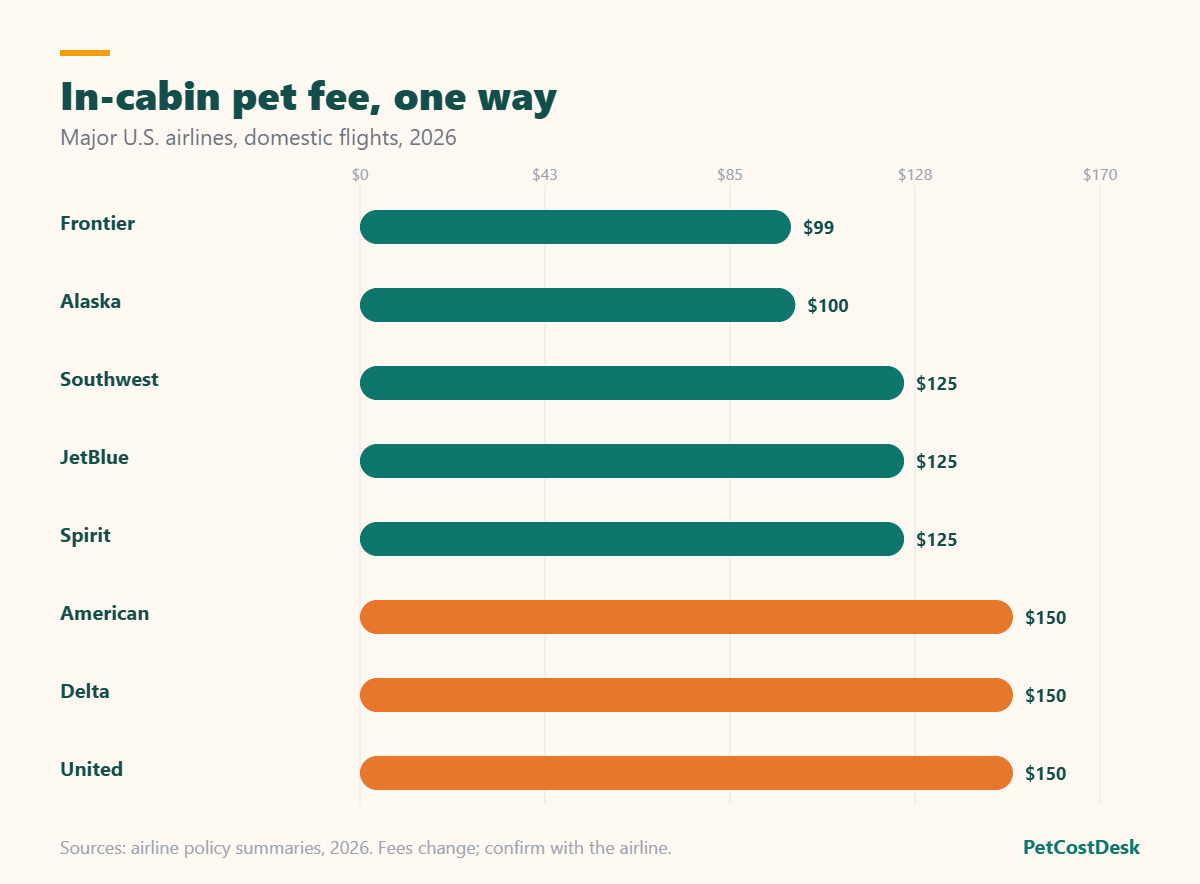
Fees in 2026 (one way, domestic) are roughly:
- Frontier: $99
- Alaska: $100
- Southwest, JetBlue and Spirit: $125
- American, Delta and United: $150
Delta raised its domestic fee from $95 to $150 in early 2026. Hawaiian’s inter-island flights are a cheap exception. Fees and rules change often, so always check the airline’s own pet page before you book.
The basic in-cabin rules
- The pet must fit in a carrier that goes under the seat in front of you.
- The carrier usually counts as your carry-on or personal item.
- Airlines limit how many pets can be on each flight, so add your pet when you book.
- Many airlines restrict snub-nosed breeds (like pugs and bulldogs) and very young puppies or kittens.
- Long layovers can trigger extra fees. United, for example, charges more for domestic layovers over 4 hours.
Trained service dogs generally fly free under their own rules and paperwork. Emotional support animals are treated as regular pets.
Flying a large dog
This is where travel gets expensive. Delta and American limit cargo pet transport to active military and State Department personnel, and United ended its PetSafe program. Owners of large dogs often have to use a professional pet shipper, which commonly costs $500 to $1,000 or more each way, or drive. For many moves, a road trip with pet-friendly hotels is cheaper and less stressful for the dog.
The extra costs people forget
- Health certificate: many airlines and destinations require a recent vet exam and certificate. Budget for a vet visit; see vet visit costs.
- Vaccines: rabies is usually required. Check your pet’s schedule in our dog and cat vaccine guides.
- Microchip: required for many international trips. See microchip cost.
- International paperwork: USDA endorsement fees start around $101 per certificate, and some countries require blood tests or waiting periods that take months.
- Pet fees at hotels and rentals.
Is it cheaper to leave your pet home?
For a short trip, often yes. A $300 round-trip pet fee plus a health certificate can cost more than several nights of care. Compare with dog boarding vs. a pet sitter. For a long stay or a move, bringing your pet usually makes more sense.
Before you fly
Ask your vet whether your pet is healthy enough to fly, especially if it is old, has a heart or breathing problem, or is a snub-nosed breed. Don’t give sedatives unless your vet prescribes them; many airlines and vets advise against sedation for flights.
Key takeaways
- U.S. airlines charge about $99 to $150 each way for a small pet in the cabin.
- American, Delta and United charge $150; Frontier and Alaska are the cheapest major options.
- Large dogs often can’t fly as cargo anymore; pet shippers cost about $500 to $1,000+ each way.
- Budget for a health certificate, vaccines and, for international trips, USDA paperwork.
- Rules change often, so confirm fees and carrier sizes on the airline’s own site.