
Last updated: November 19, 2026
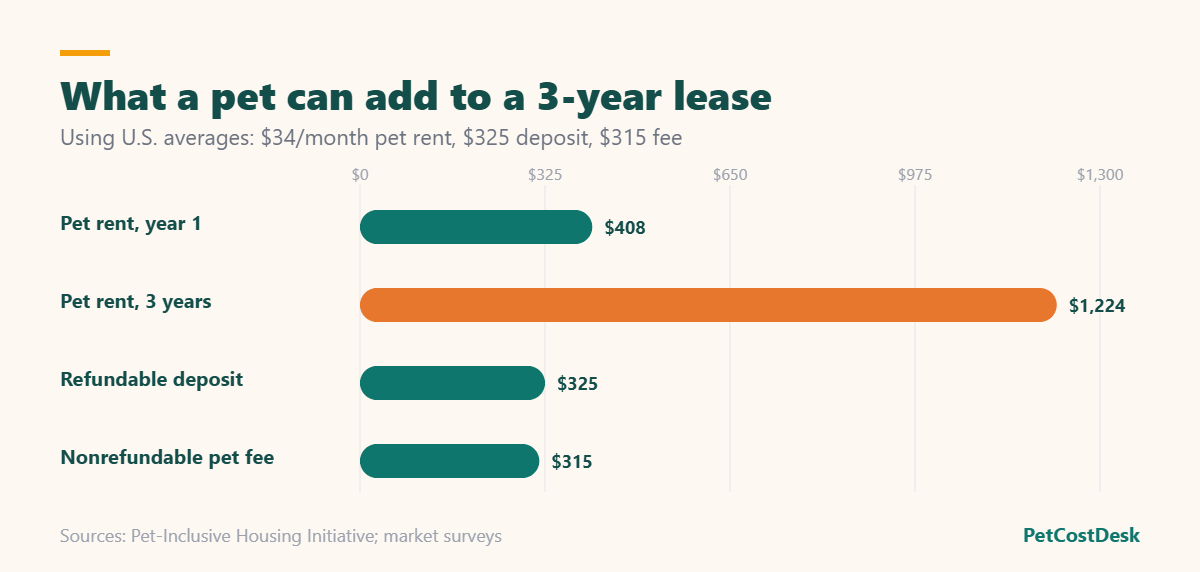
If you rent, your pet has its own housing costs. Most pet-friendly landlords charge one or more of three things: a pet deposit, a one-time pet fee, and monthly pet rent. U.S. surveys put average pet rent at about $34 a month and the average pet deposit at about $325. Pet rent is the one that adds up: over a three-year stay it costs more than $1,200.
The short version
| Charge | Typical amount | Refundable? |
|---|---|---|
| Pet rent | About $30 to $37 a month (often $25 to $75) | No |
| Pet deposit | About $300 to $325 | Usually, minus damage |
| One-time pet fee | About $315 | No |
The three charges explained
Pet deposit: works like a security deposit. You pay it when you sign the lease and get it back at move-out, minus the cost of pet damage. Pet fee: a one-time charge you don’t get back. Some landlords call it a “nonrefundable deposit.” Pet rent: a monthly charge added to your base rent for as long as the pet lives there.
Pet rent is now standard. In PetScreening’s 2026 survey of property managers, nearly 7 in 10 charged pet rent and just over half collected a nonrefundable pet fee. Only about 23.5% offered refundable pet deposits. Apartments.com listing data shows dog-friendly units averaging about $33 a month in pet rent and cat-friendly units about $31.
What it costs over a lease
At $34 a month, pet rent costs $408 a year and $1,224 over three years. Add a $315 nonrefundable fee and one pet costs about $1,540 over three years, before any deposit deductions. Many landlords charge per pet, so two dogs can double that. Pet rent tends to be higher in big, tight rental markets.
Other rules to read in the lease
- Breed and weight limits. Many buildings restrict certain breeds or dogs over a weight limit.
- Pet screening fees charged by third-party services.
- Renters insurance with pet liability. Some landlords require it in case your dog injures someone.
- Proof of vaccines and licensing.
- State limits. Some states cap total deposits or limit how a deposit can be used. Check your state’s landlord-tenant law.
Assistance animals are different
Under the federal Fair Housing Act, service animals and emotional support animals that qualify as assistance animals generally are not pets. Housing providers usually can’t charge pet rent, pet deposits or pet fees for them, though you can still be responsible for actual damage. Rules on documentation are specific, so check HUD guidance or a local tenant organization if this applies to you.
How to lower your pet housing costs
- Ask to negotiate. Offer a larger refundable deposit in exchange for lower or no monthly pet rent.
- Bring a pet resume: vaccine records, spay or neuter proof, training certificates and a reference from a past landlord.
- Compare total cost, not base rent. A cheaper unit with $50 pet rent can cost more than a pricier unit with none.
- Document the unit at move-in with photos so you aren’t charged for old damage.
- Fix small pet damage yourself before move-out.
Getting a new pet while renting? Add these costs to the plan in our first-year puppy checklist and yearly cat costs guides.
Key takeaways
- Average U.S. pet rent is about $34 a month; deposits average about $325 and nonrefundable fees about $315.
- Pet rent never comes back and can pass $1,200 over a three-year lease.
- Most property managers now charge pet rent; few offer refundable pet deposits.
- Assistance animals generally can’t be charged pet rent or pet fees under the Fair Housing Act.
- Negotiate, bring a pet resume, and compare the total cost of each rental.