Last updated: November 18, 2026
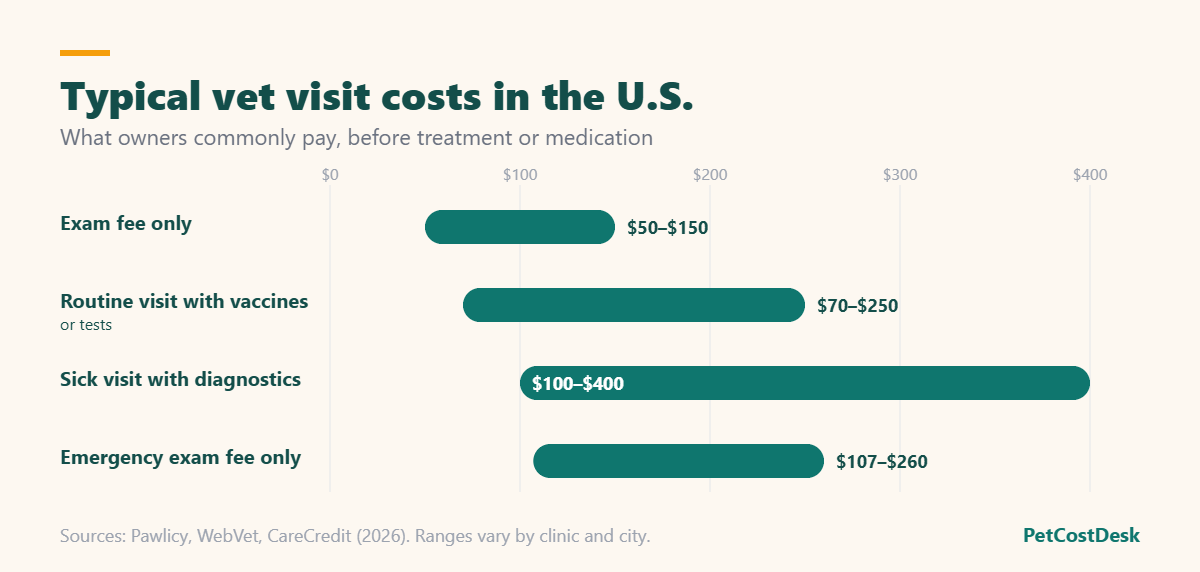
A basic vet exam for a dog or cat usually costs $50 to $150 in the U.S. That’s just the fee to have the vet examine your pet. Vaccines, tests and medication are billed on top, so a routine visit often ends up between $70 and $250, and a sick visit can easily pass $400. Here’s what drives the bill and how to keep it predictable.
The short version
| Type of visit | Typical cost | What’s included |
|---|---|---|
| Exam fee only | $50–$150 | Physical exam and the vet’s time |
| Routine wellness visit | $70–$250+ | Exam plus vaccines or basic tests |
| Sick or problem visit | $100–$400+ | Exam plus diagnostics such as bloodwork or X-rays |
| Emergency exam fee | $107–$260 | Exam only at an emergency hospital; treatment is extra |
What the exam fee covers
The exam fee pays for the veterinarian’s time and a nose-to-tail physical check: weight, heart and lungs, eyes, ears, teeth, skin and coat, and a feel of the belly and joints. It’s the “door charge” of every visit. Anything the vet does or prescribes after that is itemized separately.
Pet insurance marketplace Pawlicy, whose figures are reviewed by a veterinarian, puts the average routine visit at about $214 for dogs and $138 for cats once common add-ons are included.
Routine visits vs. sick visits
A routine wellness visit is planned: an exam, any vaccines that are due, and screening tests such as a heartworm or fecal test. Because you know it’s coming, it’s the easiest vet cost to budget for.
A sick visit starts with the same exam, but the vet usually needs more information. Bloodwork, urine tests, X-rays or an ultrasound can each add $100 or more, and medication comes on top. That’s why a limping dog or a cat that stopped eating can cost several times more than a checkup.
Emergency visits cost more from the start
Emergency hospitals are staffed around the clock, so their exam fee is higher. CareCredit’s national data puts the average emergency exam at $135 for dogs and $143 for cats, with a typical range of about $107 to $260 depending on the state. Treatment, hospitalization or surgery can push the total into the thousands. If you think your pet is in danger, don’t wait to compare prices: call your vet or the nearest emergency hospital.
What makes a vet visit more expensive
- Where you live. Clinics in big cities and high-cost states usually charge more than rural practices.
- Type of clinic. General practices are cheaper than specialists and emergency hospitals. Nonprofit and shelter clinics are often the most affordable for basics.
- Your pet’s size and age. Larger dogs need larger doses of many medications. Senior pets often need extra screening tests.
- Timing. Evenings, weekends and holidays can add an after-hours fee.
- Rising prices. Veterinary prices have been climbing faster than overall inflation for years, according to the U.S. Bureau of Labor Statistics consumer price index for veterinarian services.
How often your pet needs a checkup
Preventive care guidelines from the American Animal Hospital Association (AAHA) and the American Veterinary Medical Association (AVMA) recommend that every dog and cat see a vet at least once a year. Puppies, kittens and senior pets usually need more frequent visits. Ask your vet what schedule fits your pet.
How to keep vet costs under control
- Ask for an estimate. Before tests or treatment, ask for a written estimate and which items are essential today.
- Keep up with preventive care. Vaccines, parasite prevention and dental care help avoid bigger bills later.
- Compare low-cost options for basics. Vaccine clinics and nonprofit clinics can be cheaper for routine shots.
- Plan for the unexpected. Set aside a monthly amount for vet bills, or look into pet insurance before your pet gets sick.
Key takeaways
- The exam fee alone usually runs $50 to $150; vaccines, tests and medication are extra.
- A routine visit often totals $70 to $250, while a sick visit with tests can pass $400.
- Emergency exams average about $135 for dogs and $143 for cats before any treatment.
- Asking for an estimate and keeping up with preventive care are the easiest ways to avoid surprises.