

Last updated: November 19, 2026
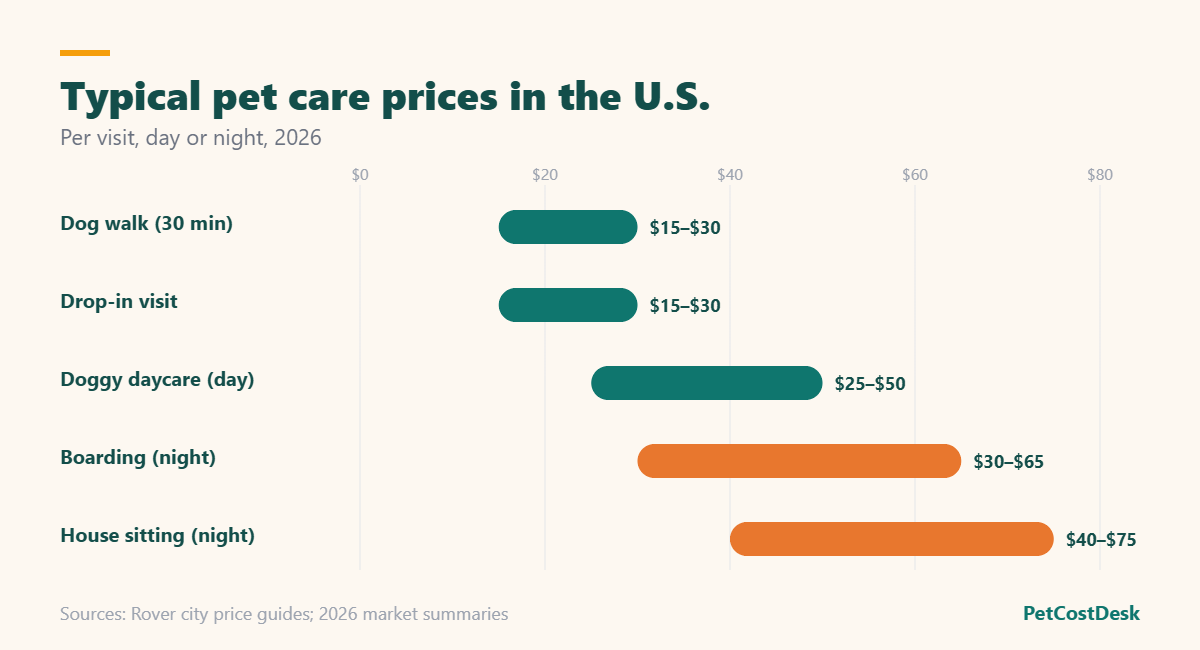
When you travel, your dog has to stay somewhere. The main choices are boarding (at a kennel or in a sitter’s home), a sitter who stays in your home, or drop-in visits. Overnight care in the U.S. usually costs $30 to $75 a night, and Rover’s national averages sit around $40 per night for overnight care and $20 per day for daytime services. The cheapest option on paper isn’t always the cheapest once extras are added.
The short version
| Option | Typical price | Best for |
|---|---|---|
| Boarding (kennel or sitter’s home) | $30 to $65 per night | Social dogs, single-pet homes |
| House sitting (sitter stays with you) | $40 to $75 per night | Anxious dogs, multi-pet homes, seniors |
| Drop-in visits | $15 to $30 per visit | Cats and independent adult dogs, short trips |
| Doggy daycare | $25 to $50 per day | Work days, not overnight |
How the prices add up for a week
Boarding is priced per night. At a mid-range rate of about $45 a night, one week costs roughly $315 and two weeks about $630. House sitting at $55 a night costs about $385 a week. For two dogs, the gap often closes: boarding adds a fee per extra dog (around $30 to $36 a night in many cities), while a house sitter usually charges much less for a second pet who already lives in the home.
Extras that change the total
Kennels often charge separately for extra walks, treats, group play and grooming. Many independent sitters include these in their daily rate. Common add-ons:
- Additional dog: often +$30 to $36 per night.
- Puppy rate: higher, because puppies need more attention.
- Holidays: prices jump around Thanksgiving, Christmas and summer weekends. Book early.
- Pick-up and drop-off: around +$20 per trip.
- Bath before going home: about +$20 to $25.
- Medication: some facilities charge for giving pills or injections.
Boarding: pros and cons
Pros: staff on site, structured routine, and often lower nightly rates. Some facilities have vets nearby. Cons: a noisy, unfamiliar place can stress some dogs, and group play brings a higher chance of kennel cough or minor scrapes. Most kennels require proof of vaccines, often rabies, DHPP and Bordetella. Check what your facility needs in our dog vaccination guide, and book the vet visit in advance if a shot is due.
House sitting: pros and cons
Pros: your dog keeps its own bed, yard and routine. Someone also keeps an eye on the house. It often works best for older dogs, anxious dogs and homes with several pets. Cons: a higher nightly rate, and you are trusting someone with your home. Meet the sitter first, check reviews, and leave written instructions plus your vet’s phone number.
Drop-in visits
Two or three 30-minute drop-ins a day can be cheaper than boarding for a calm adult dog on a short trip. They are not a good fit for puppies, dogs with separation anxiety, or dogs that need frequent bathroom breaks.
Plan for the vet bill risk
If your dog gets sick while you’re away, the sitter or kennel will need to authorize care. Leave a signed note with your vet, a payment card on file with the clinic, or a spending limit. Pet insurance doesn’t pay for boarding, but it can cover an illness or injury that happens during a stay. See emergency vet costs and how pet insurance works.
Ways to save
- Book well ahead of holidays and ask about multi-night or repeat-client discounts.
- Swap pet sitting with a trusted friend or neighbor.
- For short trips, compare two daily drop-ins against a full night of boarding.
- Ask whether walks and play are included before comparing nightly rates.
Traveling with your dog instead? Read airline pet fees and rules.
Key takeaways
- Overnight dog care usually costs $30 to $75 a night; Rover’s national average is around $40.
- Boarding is often cheaper for one dog; house sitting can win with two or more pets.
- Kennels may charge extra for walks, play and grooming that sitters include.
- Holiday rates, extra dogs and pick-up fees can raise the total a lot.
- Most kennels require up-to-date vaccines, so plan the vet visit before you travel.