Last updated: November 19, 2026
Pet surgery ranges from a few hundred dollars for a simple lump removal to $3,000 to $8,000 for complex operations like knee repair or removing a swallowed object. Anesthesia, monitoring, hospital stays and follow-up care are often a big part of the bill. Here’s what common procedures cost and how to plan for them.
The short version
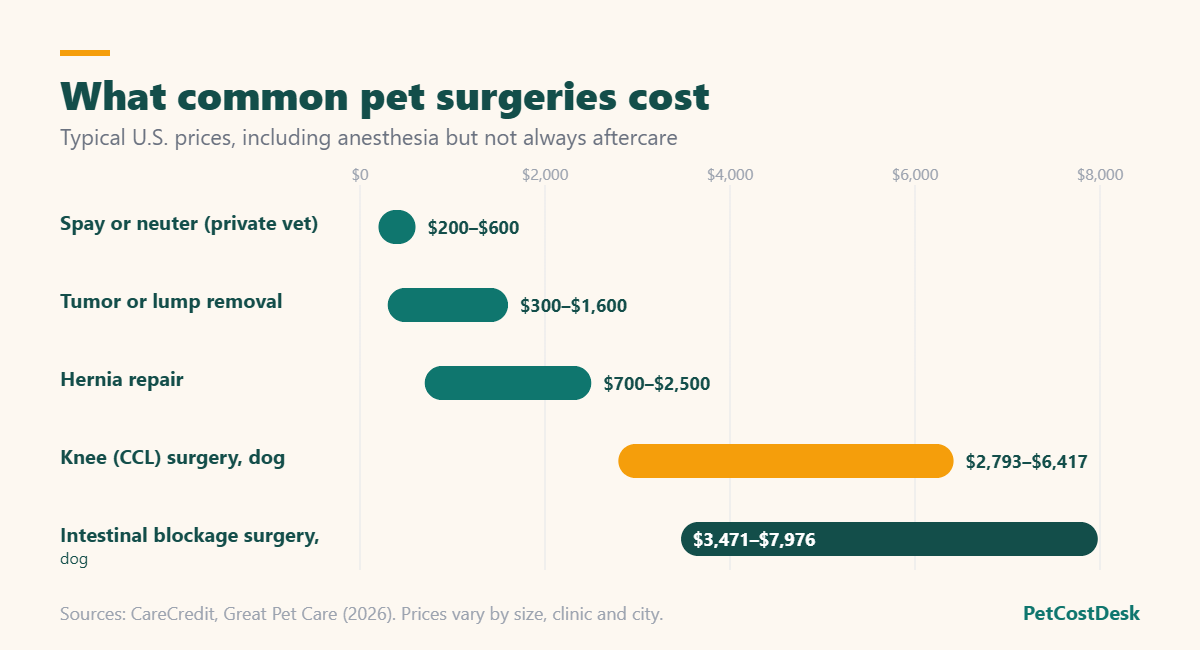
| Surgery | Typical cost |
|---|---|
| Spay or neuter (private vet) | $200–$600 |
| Tumor or lump removal | $300–$1,600 |
| Hernia repair | $700–$2,500 |
| Knee (CCL/TPLO) surgery, dog | $2,793–$6,417 (average about $3,525) |
| Intestinal blockage surgery, dog (non-emergency) | $3,471–$7,976 (average about $4,383) |
What’s included in a surgery estimate
- Pre-surgical exam and bloodwork to make sure anesthesia is safe
- Anesthesia and monitoring throughout the procedure
- The surgery itself, often priced by complexity and time
- Hospitalization, from a few hours to several nights
- Pain medication, antibiotics and a cone to take home
- Recheck visits and, for orthopedic surgery, rehabilitation
Ask for a written, itemized estimate with a low and high range. If something unexpected comes up during surgery, your vet should call you before going over the estimate.
The most expensive common surgeries
Knee surgery (CCL or “ACL” repair) is one of the most common orthopedic surgeries in dogs. CareCredit puts the national average for TPLO knee surgery at about $3,525, with a range of $2,793 to $6,417 depending on location. Aftercare such as rehab and medication is extra, and some dogs eventually need both knees done.
Swallowed objects that block the stomach or intestines often need surgery. CareCredit’s data shows a non-emergency foreign body surgery for a dog averages about $4,383, and emergency cases can cost more. Sometimes a vet can remove a small object with an endoscope instead, which is usually less invasive.
Planned vs. emergency surgery
A planned surgery at your regular vet usually costs less than the same procedure at an emergency hospital at night or on a weekend. When your vet recommends a non-urgent surgery, you have time to compare estimates and plan payment. See emergency vet costs for after-hours pricing.
How to pay for pet surgery
- Pet insurance covers many surgeries for accidents and illnesses, if the condition isn’t pre-existing. See how pet insurance works.
- Payment plans and vet financing can spread the cost. Read how to pay a vet bill you can’t afford.
- Veterinary schools sometimes offer lower-cost surgery with supervised care.
Key takeaways
- Simple surgeries like lump removal often cost $300 to $1,600.
- Knee surgery for dogs averages about $3,525 and can top $6,000.
- Swallowed-object surgery for dogs averages about $4,383 for non-emergency cases.
- Always ask for an itemized estimate, and plan with insurance or savings before you need it.