
Last updated: November 19, 2026
Filing a pet insurance claim usually takes a few minutes in your insurer’s app. You pay the vet, collect an itemized invoice and the medical records for the visit, and submit them before the claim deadline. Getting those documents right is the best way to be paid quickly.
The short version
| What you need | Why |
|---|---|
| Itemized invoice | Shows each treatment and cost; a card receipt isn’t enough |
| Medical records (SOAP notes) | Show the diagnosis and history, especially on a first claim |
| Proof of payment | Shows the bill was paid, for reimbursement policies |
| Deadline | Often 90 days; ranges from about 60 to 270 days |
Step by step
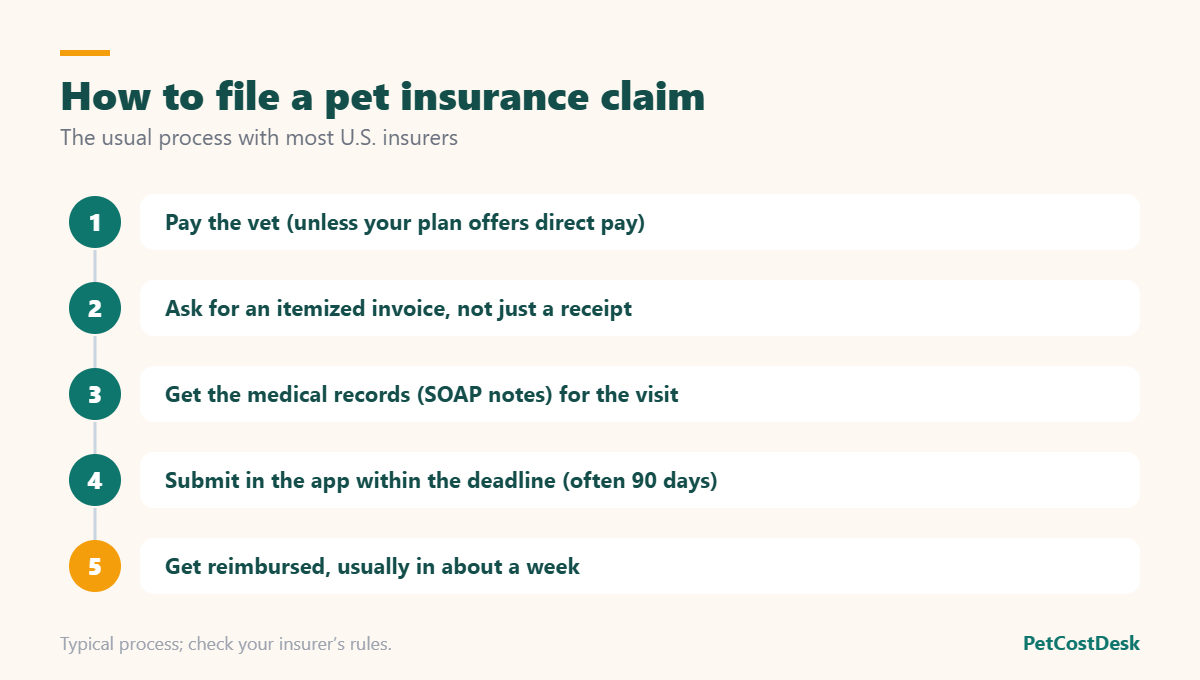
- Pay the vet. Most policies reimburse you afterward. Some insurers, such as Trupanion, can pay participating clinics directly.
- Ask for an itemized invoice showing the date, your pet’s name, each service and its cost.
- Request the medical records for the visit. Insurers often call them SOAP notes. Many vets will email them.
- Submit the claim through the app or website, with a short description of what happened.
- Track and get paid. Spot, for example, says standard claims take 5 to 7 business days on average. Direct deposit is usually faster than a check.
Know your deadline
Every insurer sets a window for filing. Fetch asks for claims within 90 days of the vet visit, and Pawlicy notes that most companies allow somewhere between 60 and 270 days. File as soon as you can.
Tips for faster payment
- Upload your pet’s full medical history when you first enroll.
- Photograph invoices at the clinic before you leave.
- Check that the invoice shows a zero balance if you’ve paid in full.
- For expensive planned treatment, ask your insurer about pre-approval.
If your claim is denied
Read the explanation, then ask your vet for records or a letter clarifying the timing of symptoms if a pre-existing condition is the issue. Most insurers have an appeal process with a set window. See pre-existing conditions and how pet insurance works.
Key takeaways
- You usually pay the vet first, then file in the insurer’s app.
- Send an itemized invoice and the medical records, not just a card receipt.
- File within the deadline, often 90 days and ranging from about 60 to 270 days.
- Uploading full records early helps claims get paid faster.