

Last updated: November 18, 2026
If you’re facing a vet bill you can’t pay, start by talking to your vet about a lower-cost treatment plan or a payment plan, then look at vet financing and pet charities. You have more options than it may seem in the moment. Here’s how to work through them, in order, without making the situation worse.
The short version
| Option | Best for | Watch out for |
|---|---|---|
| Lower-cost treatment plan | Any bill; ask first | Make sure the vet explains the trade-offs |
| Clinic payment plan | Clinics that know you | Not every clinic offers one |
| CareCredit | Larger bills you can repay within the promo period | Deferred interest if not paid in full in time |
| Scratchpay | Fixed monthly payments | Your clinic must accept it; check the rate |
| Pet charities and grants | Serious, treatable conditions and financial need | Limited funds; you may need to apply quickly |
1. Talk to your vet first
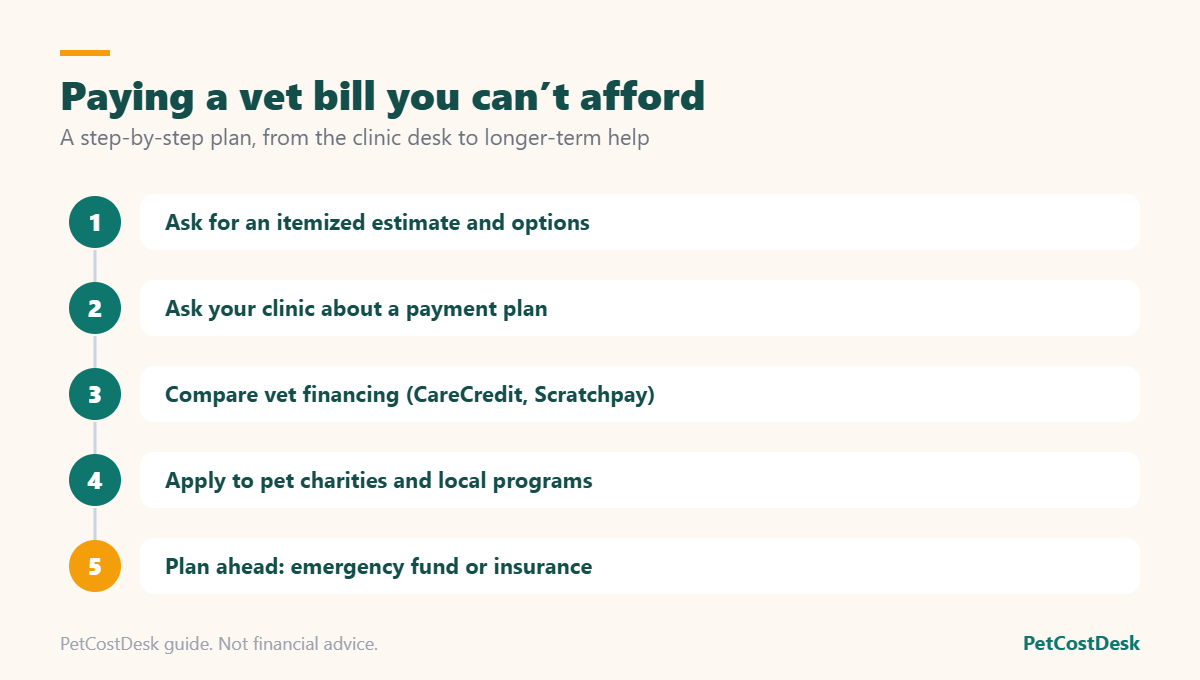
Ask for an itemized estimate and which treatments are essential today versus what can wait. There’s often more than one way to treat a problem, and your vet can suggest a plan that fits your budget. Be open about what you can afford; vets have these conversations every day.
2. Ask about a payment plan
Some clinics let established clients pay over a few weeks or months, and some offer a small discount for paying in cash. It never hurts to ask.
3. Compare veterinary financing
- CareCredit is a health care credit card accepted by many vets. It often has interest-free promotional periods, but if you don’t pay the full balance before the period ends, interest can be charged from the original purchase date. The Consumer Financial Protection Bureau warns that deferred-interest products are risky if you can’t pay in time.
- Scratchpay offers payment plans with fixed payments. The clinic has to be registered with Scratchpay, which pays the vet up front.
- A personal loan can work for a large bill if you get a reasonable rate. Our sister site explains how to compare personal loan offers.
Read the terms carefully and borrow only what you can repay.
4. Apply for help from pet charities
- National nonprofits such as The Pet Fund and RedRover Relief give grants to pet owners in financial need, usually for specific situations.
- The Humane Society of the United States keeps lists of financial help for pet owners by state.
- Local shelters, humane societies and veterinary schools often run low-cost clinics or assistance funds.
- Breed and condition-specific groups sometimes help with the cost of particular illnesses.
- Crowdfunding can help with large or ongoing treatment.
5. Plan for next time
Once the crisis is over, set up a small monthly pet emergency fund and consider insurance while your pet is healthy. See is pet insurance worth it? and what emergency vet care costs.
Key takeaways
- Start with your vet: ask for an itemized estimate, a lower-cost plan or a payment plan.
- CareCredit and Scratchpay can spread the cost, but check interest terms carefully.
- Pet charities, shelters and vet schools can help if you qualify.
- An emergency fund or insurance makes the next big bill easier to handle.